Experiencing an ectopic pregnancy can leave you with many questions about what comes next, especially if you hope to become pregnant again. You may wonder whether an ectopic pregnancy will affect your fertility, how long you should wait before trying to conceive, or whether you’re more likely to experience another ectopic pregnancy in the future.
The reassuring news is that pregnancy after an ectopic pregnancy is possible for many patients, including those who have had one fallopian tube removed. However, your individual chances of conceiving and your recommended next steps depend on factors such as the health of your fallopian tubes, how the ectopic pregnancy was treated, your age, and your overall reproductive health.
Let’s look at what to expect when planning for a pregnancy after an ectopic pregnancy.
What is an Ectopic Pregnancy?
An ectopic pregnancy is when a fertilized egg implants somewhere outside the uterus rather than within the uterine lining. Most ectopic pregnancies develop within a fallopian tube, although they can occasionally occur elsewhere.
Unfortunately, an ectopic pregnancy cannot develop into a viable pregnancy. As it grows, it can also cause the fallopian tube to rupture and lead to potentially life-threatening internal bleeding, making early diagnosis and treatment extremely important.
Symptoms of an ectopic pregnancy can initially resemble those of any early pregnancy, including a missed period, breast tenderness, nausea, and a positive pregnancy test. Other symptoms can include:
- Abnormal vaginal bleeding
- Pelvic or abdominal pain, particularly on one side
- Lower back pain
- Shoulder pain
- Dizziness or weakness
- Fainting
Severe abdominal or pelvic pain, shoulder pain, dizziness, weakness, or fainting during pregnancy can indicate internal bleeding and you should get immediate medical attention.
Can You Get Pregnant After an Ectopic Pregnancy?
Yes, many patients are able to conceive and have a healthy pregnancy after an ectopic pregnancy.
Your chances depend partly on what caused the ectopic pregnancy and whether your fallopian tubes were affected. If the ectopic pregnancy was treated without removing a fallopian tube, or if your remaining tube is healthy after one tube has been removed, natural conception may still be possible.
Other factors also influence fertility, including:
- Your age
- Ovarian reserve
- The condition of your remaining fallopian tube
- Previous pelvic infections or pelvic inflammatory disease (PID)
- Endometriosis
- Previous pelvic or abdominal surgery
- Your partner’s sperm health
- Other underlying causes of infertility
This is why fertility after an ectopic pregnancy should be evaluated individually rather than based solely on whether one or both fallopian tubes are present.
What Are the Chances of a Successful Pregnancy After an Ectopic Pregnancy?
The Royal College of Obstetricians and Gynecologists (RCOG) notes that the chances of having a future successful pregnancy are very good and 65% of women are healthily pregnant within 18 months of an ectopic pregnancy. Some studies suggest this figure rises to around 85% over two years. However, a previous ectopic pregnancy does increase your risk of another ectopic pregnancy.
Because of this increased risk, early monitoring is particularly important the next time you become pregnant.
How Does Ectopic Pregnancy Treatment Affect Future Fertility?
How an ectopic pregnancy affects fertility depends partly on how it was treated. Treatment may involve monitoring, medication, or surgery depending on the pregnancy’s location, your hCG levels, symptoms, and whether there is concern about rupture or internal bleeding.
Expectant management allows some early ectopic pregnancies to resolve without medication or surgery. While this avoids removing a fallopian tube, any underlying tubal damage may still affect fertility.
Methotrexate stops the pregnancy from developing so the body can absorb the tissue. It can treat an ectopic pregnancy without removing the affected tube and is not known to impair ovarian function.
Surgery may be necessary if an ectopic pregnancy has ruptured or cannot be safely treated with medication. Depending on the circumstances, the surgeon may remove the affected tube (salpingectomy) or remove the pregnancy while preserving the tube (salpingostomy).
Even if one fallopian tube is removed, natural pregnancy may still be possible if the remaining tube is healthy.
How Long Should You Wait to Get Pregnant After an Ectopic Pregnancy?
There’s no single timeline for trying to conceive after an ectopic pregnancy and when you can safely try again depends on how the pregnancy was treated and how you’re recovering.
If you were treated with methotrexate, you’ll generally need to wait at least three months before trying to conceive. After surgery or expectant management, your doctor can help you decide when it’s safe to start trying again.
It’s also okay if you need more time emotionally. Before trying again, talk with your OB-GYN or fertility specialist about your recovery and any factors that could affect your next pregnancy.
Should You Have Fertility Testing After an Ectopic Pregnancy?
Not everyone needs fertility testing after a single ectopic pregnancy. However, you may want to consider fertility testing if you have difficulty conceiving afterward or already have other risk factors for infertility.
Depending on your medical history, a fertility specialist may recommend evaluating your fallopian tube health, ovarian reserve, or menstrual cycle and ovulation.
The appropriate fertility testing after an ectopic pregnancy depends on your reproductive history, age, previous treatment, and how long you’ve been trying to conceive.
What to Expect When You Get Pregnant Again After an Ectopic Pregnancy
A positive pregnancy test after an ectopic pregnancy can feel exciting and a little nerve-wracking. Contact your OB-GYN or fertility specialist early so they can monitor the pregnancy and confirm that it has implanted in the uterus.
Your provider may use hCG blood tests to track how the pregnancy is progressing, followed by an early ultrasound, typically around 6 to 8 weeks, to confirm its location. Your exact monitoring schedule may vary based on your history and test results.
Can IVF Help After an Ectopic Pregnancy?
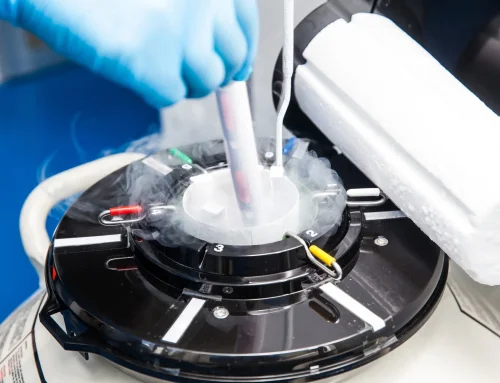
For some patients, in vitro fertilization (IVF) may be an option after an ectopic pregnancy, particularly when fallopian tube damage makes natural conception difficult.
IVF differs from natural conception because fertilization occurs outside the body. An embryo is then transferred directly into the uterus, meaning the fallopian tubes are not needed for sperm and egg to meet.
IVF could be the right treatment option if:
- Both fallopian tubes have been removed
- The remaining fallopian tube is severely damaged or blocked
- There is a history of tubal-factor infertility
- Pregnancy has not occurred after an appropriate period of trying naturally
At Red Rock Fertility Center, we always base our fertility treatment plans on a comprehensive fertility evaluation rather than a previous ectopic pregnancy alone.
When Should You See a Fertility Specialist After an Ectopic Pregnancy?
You don’t necessarily need to wait until you have difficulty conceiving to speak with a fertility specialist.
A consultation may be particularly helpful if:
- You have had more than one ectopic pregnancy
- One or both fallopian tubes have been removed
- Your remaining fallopian tube may be damaged
- You have a history of endometriosis, PID, or pelvic surgery
- You previously experienced infertility
- You have been trying to conceive without success
- You want to understand your fertility before trying again
Your age also matters when deciding how long to try on your own. In general, fertility evaluation is recommended after 12 months of trying for patients under 35 and after six months for patients 35 or older. Depending on your history, your doctor may recommend evaluation sooner.
Planning for Pregnancy After an Ectopic Pregnancy
An ectopic pregnancy can be a difficult experience, both physically and emotionally. Concerns about whether you’ll be able to conceive again are understandable, but a previous ectopic pregnancy does not mean that a healthy future pregnancy is out of reach.
The most important step is understanding your individual reproductive health, including things like the condition of your fallopian tubes, your age, your ovarian reserve, previous fertility history, and how your ectopic pregnancy was treated. At Red Rock Fertility Center in Las Vegas, our fertility specialists can evaluate all of this, and much more.
If you’re considering pregnancy after an ectopic pregnancy or would like to discuss your fertility, schedule a consultation with Red Rock Fertility Center to develop a personalized plan.