Preparing for in vitro fertilization (IVF) involves more than marking appointments on your calendar. Before treatment begins, you may need to make changes to medications or supplements, prepare for injections, and consider lifestyle habits that support your overall health.
At Red Rock Fertility Center, we know that IVF can feel like a lot to take in at once. We’re here to provide you with individualized instructions based on your health, fertility diagnosis, treatment protocol, and family-building goals.
Understanding how to prepare for IVF ahead of time can help you feel more informed and ready for each stage of the process. Let’s look at some of the most important things to consider before and during an IVF cycle.
How to Prepare for IVF Before Your Cycle Begins
IVF treatment varies from patient to patient, so there is no universal preparation plan that guarantees a successful outcome. Factors such as age, ovarian reserve, sperm health, underlying fertility conditions, embryo development, and other individual circumstances can all influence IVF outcomes.
However, there are a few things you can do to prepare your body, schedule, and support system for treatment.
Understand Your IVF Treatment Plan
Before starting IVF, make sure you understand what your treatment cycle might look like.
During a typical IVF cycle, medications stimulate the ovaries to develop multiple follicles. Your fertility team monitors your response through bloodwork and ultrasounds before scheduling the egg retrieval.
Depending on your treatment plan, fertilization and embryo development may be followed by a fresh embryo transfer, embryo freezing, genetic testing, or a frozen embryo transfer at a later date.
Before beginning your IVF treatment plan, ask your fertility team questions about:
- Which medications you will take and when
- How to administer your injections
- When monitoring appointments typically occur
- What to expect before and after egg retrieval
- Whether you are planning a fresh or frozen embryo transfer
- Which symptoms warrant a call to your care team
Review Your Current Medications and Supplements With Your Fertility Specialist
Tell your fertility specialist about all medications, vitamins, supplements, and herbal products you currently take, including over-the-counter products.
Reviewing these medications with your fertility doctor doesn’t mean you should stop a prescription medication without medical approval. Together, you will review your medications and determine whether you should continue, discontinue, or adjust anything before IVF.
This is also a good time to discuss prenatal vitamins with your doctor. The American Society for Reproductive Medicine (ASRM) recommends that women trying to conceive take at least 400 micrograms of folic acid each day to help reduce the risk of neural tube defects.
Focus on a Balanced, Nutrient-Dense Diet
Spoiler alert: there’s really no such thing as a “fertility diet.” Instead, focus on eating a balanced diet to support your overall health. That may include fruits and vegetables, whole grains, lean protein sources, healthy fats, and other nutrient-dense foods.
Your fertility specialist can also help you determine whether your individual health history calls for additional nutritional recommendations.
Work Toward a Healthy Weight Before Treatment When Appropriate
Weight can play a role in reproductive and pregnancy health, but during an IVF cycle is generally not the time to begin an aggressive weight-loss program.
If your physician recommends losing or gaining weight, discuss those goals before treatment. Once your cycle begins, your priority should be following your treatment plan and getting adequate nutrition rather than pursuing rapid weight changes.
Avoid crash diets, significant calorie restriction, or dramatic changes to your exercise routine without discussing them with your fertility specialist.
What Not to Do When Preparing for IVF
Knowing what to avoid can be just as important as knowing what to add to your routine as you prepare for IVF.
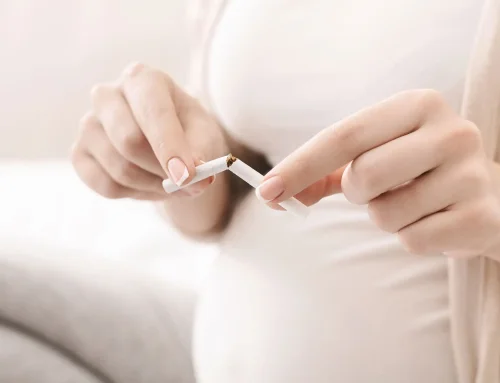
Don’t Smoke or Vape
If you smoke or vape, quitting is one of the most meaningful health changes you can make before fertility treatment.
Research has established a strong relationship between tobacco use and reproductive health. The U.S. Food and Drug Administration notes that smoking can reduce fertility, affect hormone production, harm the reproductive system, and damage sperm DNA.
Even if you stop smoking cigarettes, that doesn’t mean that vaping is a safe alternative. Electronic nicotine delivery systems may also pose reproductive and pregnancy risks.
If quitting feels difficult, talk with your physician. There are plenty of resources to help people stop smoking and you don’t have to do it alone.
Avoid Recreational Drugs and Discuss Alcohol With Your Doctor
When preparing for pregnancy, the American College of Obstetricians and Gynecologists (ACOG) recommends discontinuing tobacco, marijuana, and illicit drugs.
Research into alcohol consumption and fertility itself is less straightforward, but it may be beneficial for your overall health to limit alcohol use while preparing for IVF. Once you become pregnant, though, there is no safe amount of alcohol during pregnancy.
Don’t Overdo High-Intensity Exercise During Ovarian Stimulation
Exercise is an important part of overall health, and you generally don’t need to stop being active simply because you’re trying to conceive. In fact, regular physical activity is a great way to prepare for IVF.
Your exercise routine may need to change once ovarian stimulation begins, however. Fertility medications cause the ovaries to enlarge as multiple follicles develop. Your fertility team may recommend limiting strenuous exercise, high-impact activities, heavy lifting, or movements involving significant twisting during parts of your treatment cycle and instead recommend things like walking or other gentle forms of movement.
Don’t Assume You Can Have Unprotected Sex Throughout Your IVF Cycle
You don’t need to stop physical or emotional intimacy with your partner during fertility treatment. However, your fertility specialist may recommend avoiding intercourse, or using barrier protection, at specific points during an IVF cycle.
During ovarian stimulation, several follicles can develop at once. Unprotected intercourse may create a risk of unintended multiple pregnancy if ovulation occurs. Enlarged ovaries can also make intercourse uncomfortable during certain stages of treatment.
Follow your fertility clinic’s instructions about when intercourse is safe rather than relying on general IVF advice online.
IVF Preparation Checklist
To summarize, here’s a quick list of how to prepare for IVF!
Prepare for IVF With Red Rock Fertility Center
Preparing for IVF can feel overwhelming, but you don’t need to navigate it on your own.
At Red Rock Fertility Center, our team guides patients through each stage of the IVF process, from initial fertility testing and treatment planning through ovarian stimulation, egg retrieval, embryo development, and embryo transfer.
Your IVF preparation plan should reflect your individual health history, fertility diagnosis, medications, and family-building goals.
If you’re considering IVF in Las Vegas, schedule an appointment with Red Rock Fertility Center to discuss your next steps!